
Manual vs automatic: how each gearbox works and which to learn in
A manual gearbox has a clutch pedal and a gear lever, and you choose every gear. An automatic chooses for you, using a torque converter, two clutches, a belt and pulleys, or, in most electric cars, a single fixed gear. In the UK, passing your test in an automatic gives you a licence for automatics only[6][8].
The main types at a glance
| Type | Pedals | How it changes ratio |
|---|---|---|
| Manual | Three (clutch, brake, accelerator) | You press the clutch and move the lever[7] |
| Torque-converter automatic | Two | Fluid coupling plus planetary gearsets, shifted hydraulically[1] |
| Dual-clutch (DCT) | Two | Two clutches, one for odd and one for even gears, with the next gear pre-selected[2] |
| CVT | Two | Two variable pulleys and a belt or chain, with no fixed steps[3] |
| Single-speed electric | Two | One fixed reduction gear; the motor covers the speed range[4] |
The UK driving test treats any two-pedal car as automatic or semi-automatic, and a three-pedal car as manual[7].
Manual gearbox
In a manual, the clutch pedal disconnects the engine from the gearbox so you can move the lever to a new gear, then reconnects it as you lift your foot. You decide when to change and which gear to use, so you can hold a low gear on a steep hill or for engine braking. The cost is coordination: clutch, accelerator and lever have to work together, which is what new drivers find hardest.
The classic manual skill is the hill start: holding the car on the parking brake, raising the clutch until it begins to bite, adding a little accelerator and releasing the brake as the car starts to pull. Stalling and rolling back are the usual learner mistakes, and the reason many people find automatics easier.
Manuals are becoming rarer. Worldwide, they made up 43 % of new cars produced in 2015 and 37 % by 2020; in the US, only 2.4 % of new cars had one in 2020; and in the UK most new cars have been automatics since 2020[1].
Torque-converter automatic
The traditional automatic replaces the clutch with a torque converter, a fluid coupling that lets the engine turn while the car stands still and multiplies torque at low speed. Behind it, planetary gearsets give the ratios, locked in turn by clutches and bands under hydraulic pressure controlled by a computer[1].
General Motors' Hydra-Matic, introduced in 1939 for the 1940 model year, was the first mass-produced automatic, and Buick's Dynaflow of 1948 was the first with a torque converter[1]. Modern units have many more gears: Toyota's first eight-speed reached production in 2007, ZF's nine-speed in 2013 and Toyota's ten-speed in 2017[1]. More ratios let the engine stay near its most efficient speed.
Dual-clutch transmission
A dual-clutch gearbox is two manual gearboxes in one case, with one clutch for the odd gears and another for the even ones. While you drive in third, fourth is already selected on the other shaft; the shift is just one clutch opening as the other closes, so drive to the wheels is barely interrupted and changes are several times faster than a manual[2].
The 2003 Volkswagen Golf R32 was the first mass-production car with one[2]. The usual drawback is behaviour at walking pace, where some dual-clutch boxes can jolt or shudder[2].
Continuously variable transmission
A CVT has no fixed gears. Two pulleys, each made of two cones that slide together or apart, are linked by a belt or chain; as one pulley widens and the other narrows, the ratio changes smoothly. That lets the engine hold its most efficient speed while the car's speed changes[3].
Belt CVTs are common in scooters and small vehicles, and heavier, higher-torque cars need a steel chain or band design. Toyota's hybrids are often called CVTs, but they use planetary gears and electric motors rather than a belt between pulleys[3].
Electric cars: usually one gear
Most battery-electric cars use a single-speed reduction gear rather than a multi-speed gearbox, because an electric motor works across a wide speed range and gives strong torque from almost a standstill[4]. Edmunds names the Porsche Taycan and Audi e-tron GT as rare exceptions with a two-speed unit on the rear axle[4].
Electric cars also slow themselves through regenerative braking: the motor works as a generator and charges the battery as you lift off. Some can stop on level ground with regeneration alone, known as one-pedal driving, though friction brakes are still needed for hard stops[5].
Licences: which should you learn in?
In the UK, the licence category for automatics is listed as Category B auto, which covers automatic cars only[8]. If your licence covers automatics only, you can drive automatic cars but not manuals[6][8], and GOV.UK adds that taking the test in a semi-automatic also limits you to automatic and semi-automatic cars[7]. To upgrade, you pass a driving test in a manual; you do not need to retake the theory test, and you can keep driving automatics if you fail[6].
Learning in a manual keeps every option open; learning in an automatic takes the clutch and gear changes off the list of skills to master. With manuals now a small share of new cars in many markets, more learners choose automatic. Rules differ elsewhere, so check with the licensing authority in your own country before you book lessons.
Fuel economy: is a manual still cheaper to run?
Manuals used to be the economical choice, but the gap has narrowed. More ratios let a modern automatic keep the engine near its most efficient speed[1]. Volkswagen has claimed its dual-clutch gearbox uses about 6 % less fuel than a six-speed manual and 20 % less than a conventional automatic, though that is the maker's own figure[2]. A CVT can hold the engine at its most efficient speed while the car's speed changes, which offsets the losses in its belt drive, put at around 88 % efficiency[3].
The honest answer is that it depends on the model. If running cost matters, compare the official economy figures for the exact versions you are considering rather than relying on the gearbox type alone.
Gearboxes in Drive Your City
Drive Your City uses an automatic gearbox only: there is no manual shifting and no clutch. W accelerates and S brakes and then reverses; the car picks the gear.
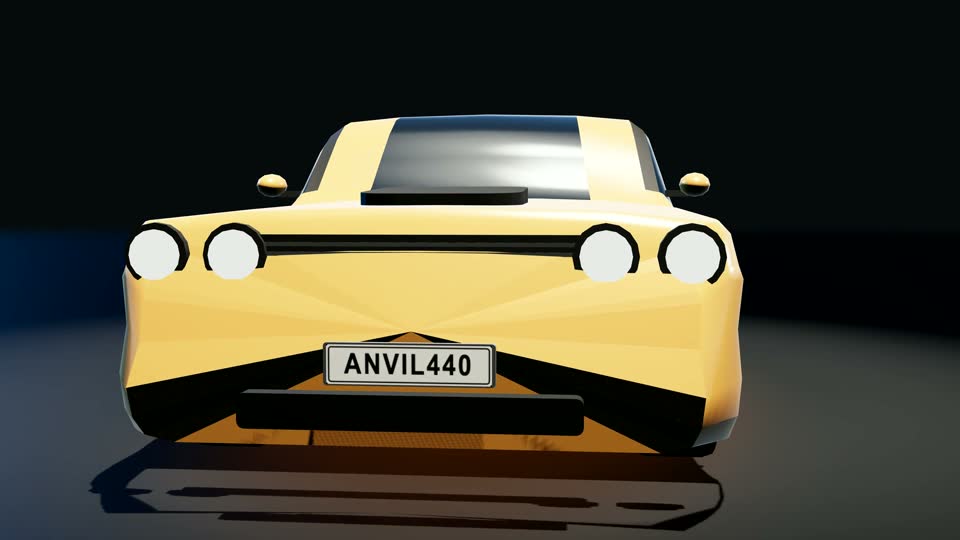
The vehicles still differ in their gearing, which you can hear and feel. The Anvil 440 muscle car has V8 torque and four speeds, the Vesper GT sports coupe has seven, the Regent executive saloon has eight, and the Flux electric car has one gear with regenerative braking. A run along Mulholland Drive in each makes the difference plain.
Questions
Can I drive a manual car on an automatic licence in the UK?
No. A pass in an automatic or semi-automatic car only covers automatics; you need to pass a test in a manual to upgrade, without retaking the theory test.
Do electric cars have gears?
Most use a single fixed reduction gear because the motor works across a wide speed range; a few performance models have two speeds.
Is a dual-clutch gearbox an automatic?
Yes for driving purposes: it has two pedals and shifts itself, though inside it works like two manual gearboxes with automated clutches.
Does Drive Your City have a manual gearbox?
No. The game uses an automatic gearbox only, with no manual shifting or clutch.
Sources
Facts on this page come from these sources, checked on 20 November 2026. Details about the game come from the game itself.
- Automatic transmission, Wikipedia
- Dual-clutch transmission, Wikipedia
- Continuously variable transmission, Wikipedia
- Do electric cars have transmissions?, Edmunds
- Regenerative braking, Wikipedia
- Upgrade an automatic car driving licence to a manual one, GOV.UK
- Driving test: cars, using your own car for your test, GOV.UK
- Driving licence categories, GOV.UK