
What is drifting? Techniques, judging and touge roots
Drifting is driving a car sideways on purpose: the driver makes the rear tyres lose grip, holds the car at a large angle with countersteer and throttle, and keeps it on a chosen line through the corners. As a motorsport it is judged on line, angle and style rather than timed[1][3].
What a drift is
In a drift the car oversteers deliberately: the rear tyres slide at a bigger slip angle than the fronts, and the front wheels often point the opposite way to the turn[1]. The driver balances the slide with steering and throttle, so the car goes where they want while pointing somewhere else. A spin is a drift that got away; a drift is a slide that stays under control. Drift judging in general looks at speed, angle, showmanship and the line through a corner or a set of corners[1].
Most drift cars are rear-wheel drive, so the throttle can push the rear out and hold it there. Competition cars add more steering lock, a hydraulic handbrake and a locked differential so both rear wheels spin together.
Where drifting came from
Drifting grew up in Japan. Racer Kunimitsu Takahashi, a former motorcyclist, is credited with developing the techniques in the 1970s, and the bias-ply tyres of the era suited high slip angles[1]. The style spread to street racers on mountain roads[1]. Keiichi Tsuchiya, later called the Drift King, practised on those passes, or tōge, and became famous in the racing scene[1]. Tōge simply means mountain pass[4].
In Japan, street racers are called hashiriya. One reason given for street racing there is cost: a session on a private circuit can cost around ¥20,000, while expressway tolls average under ¥1,000[5].
A 1987 video, Pluspy, showing Tsuchiya drifting, inspired many later drivers, and in 1988 he and Daijiro Inada helped run one of the first events just for drifting[1]. That street side of the story is a reason it needs to be said plainly: racing on public roads is illegal and is linked to a higher risk of crashes causing serious injury or death[5]. Modern drifting is a sport for closed venues, and Tsuchiya later helped found the D1 Grand Prix[2]. Judged series now run in Japan, the United States and Europe[1].
How drivers start a drift
These are motorsport techniques, done on a closed course after training. Each one upsets the balance of the car so the rear tyres break grip[1].
- Clutch kick: with the engine at high revs, the driver dips and snaps back the clutch. The jolt of torque breaks the rear tyres loose[1].
- Power-over: in a powerful rear-drive car, simply applying too much throttle mid-corner makes the rear step out[1].
- Feint, or Scandinavian flick: the driver steers briefly away from the corner, then sharply into it. The car's weight swings back and the rear slides out[1].
- Lift-off: lifting off the throttle mid-corner moves weight forward, lightening the rear tyres enough to start a slide[1].
- Handbrake: pulling the handbrake locks the rear wheels for a moment to start the slide, useful at tight hairpins[1].
Once sliding, the driver holds the angle with countersteer and throttle, then links into the next corner by swinging the car the other way, a transition. More throttle adds angle and less lets the rear regain grip. Judges give more for runs with little steering correction mid-corner and smooth transitions, because that shows control[3].
How judges score a run
Formula Drift, the top series in the United States, judges every run on line, angle and style[1][3]. Judges set the line for each track with inner clipping points, which the car should brush, and outer clipping zones, which it should reach wall to wall[3].
| Criterion | What judges look for | Points |
|---|---|---|
| Line | How closely the car follows the set line through the clipping points and zones | 1-25 |
| Angle | Slip angle held through as much of the course as possible, with smooth transitions | 1-25 |
| Style | Smoothness, aggression, closeness to walls, difficulty | 1-30, plus up to 10 from each of the line and angle judges |
The points are from Formula Drift's own guide[3]. Separate judges score line, angle and style, so no single opinion decides a run[3]. Style also covers how a drift starts, how fluid it is and how committed the driver is[1].
From qualifying to the final
A D1 Grand Prix round shows how a drift event runs. Each driver gets three solo qualifying runs, and only the best counts. The top 20 qualifiers join 10 seeded drivers, and the top 16 go into single-elimination tandem battles, paired from highest seed to lowest[2]. In battles, judges score the quality of the drift rather than the line, and a spin, understeer or a collision loses that battle[2]. If the two finalists can't be split, they run again in sudden death[2].
In Formula Drift, the style judge also weighs how close a chasing driver stays to the lead car[3], so following tight at full angle is the way to win a battle.
Tandem battles and the D1 Grand Prix
After qualifying, drivers battle in pairs. One leads and one chases, then they swap[1]. The chaser tries to match the leader's angle and line as closely as possible, while the leader tries to drive a clean, fast run. Passing the leader while drifting is frowned upon, overtaking with grip forfeits the pass, and a spin usually loses the battle[1]. Judges see both runs before deciding, because each driver leads once and chases once. A lead driver may feint the entry to the first corner to wrong-foot the chaser, which some European series count as foul play[1].
Japan's D1 Grand Prix, set up by Daijiro Inada and Keiichi Tsuchiya, held its first event in October 2000 and its first full season in 2001[2]. It made the paired "tsuiso" battle, borrowed from touge chase runs, the heart of the competition[2]. D1 qualifying runs are scored on angle, line and speed, with help from an electronic DriftBox, out of 100 points[2].
Drift in Drive Your City
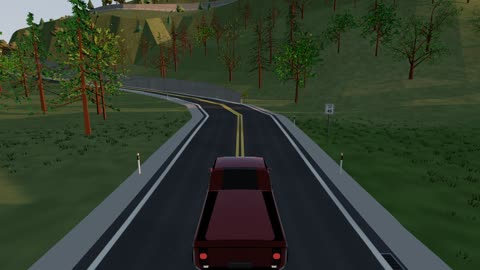
Drive Your City has a Drift race type in the Race menu, scored on angle, speed and how well you chain drifts. The World Motorsport tab also has a Drift discipline that rewards angle and speed with linked transitions. Its venues include Tsukuba, Okayama, Evergreen Speedway, Mount Haruna and Hakone. In free roam, drifts also build your combo for cash and XP.
Pick the Kaze RS drift car, which is rear-wheel drive, and set stability assists to Off. Tap Space for the handbrake to start a slide, then hold the angle with A/D and the throttle on W. Rain makes it easier to break traction and harder to hold.
Questions
Is drifting a real motorsport?
Yes. Series such as Formula Drift in the US and the D1 Grand Prix in Japan run judged competitions on closed tracks, with solo qualifying runs and paired tandem battles.
How is drifting judged?
Judges score line, angle and style. Formula Drift gives up to 25 points for line, up to 25 for angle and up to 30 for style, with extra style points from the other judges.
Do you need a rear-wheel-drive car to drift?
Competition drift cars are almost all rear-wheel drive, because the throttle can push the rear tyres into a slide and hold it there. Front- and all-wheel-drive cars can slide, but holding a long drift is much harder.
Sources
Facts on this page come from these sources, checked on 20 November 2026. Details about the game come from the game itself.
- Drifting (motorsport), Wikipedia
- D1 Grand Prix, Wikipedia
- Formula DRIFT 101: become an expert, Formula DRIFT
- Tōge, Wikipedia
- Street racing, Wikipedia