
Types of motorsport: how the main disciplines differ
Motorsport splits into disciplines by where they run and what decides the result: wheel-to-wheel races on circuits and ovals, rallies against the clock on closed roads, cross-country rally raids, long endurance races, and contests settled by a timer or by judges, such as drag racing, hill climbs and drifting[1].
10 articles in this section
The racing line: entry, apex and exit
What the racing line is, why drivers go outside-inside-outside, geometric versus late apex, compromise corners, braking points and trail braking on track.
Classic F1 circuits and what makes each one different
Monaco's streets, Spa's Eau Rouge, Suzuka's figure-eight, Monza's speed, Silverstone's sweepers and Interlagos: lap lengths, corners and character.
NASCAR tracks: superspeedways, short tracks and road courses
How NASCAR tracks differ: superspeedways, intermediates, short tracks and road courses, with lengths, banking angles, drafting and the slingshot pass.
What is rally racing? Stages, pace notes and co-drivers
Rally racing explained: one car at a time on closed roads, WRC special stages, pace notes read by a co-driver, surfaces, and Monte Carlo's Col de Turini.
The Dakar Rally: rally raid from Paris to Saudi Arabia
The Dakar Rally explained: how rally raid works, its history from Paris-Dakar to South America and Saudi Arabia, roadbook navigation and the categories.
Endurance racing: Le Mans, the Nürburgring and the 24-hour classics
Endurance racing explained: how the 24 Hours of Le Mans works, the Mulsanne Straight and its chicanes, stints, driver changes, classes, and the other 24s.
What is drifting? Techniques, judging and touge roots
Drifting explained: deliberate oversteer, how drifts start (clutch kick, power-over, feint, handbrake), how judges score it, and its roots in Japan.
Drag racing explained: from the Christmas tree to the finish line
Drag racing explained: quarter mile, eighth mile and 1,000 ft, staging, the Christmas tree, reaction time, launch, classes and NHRA records.
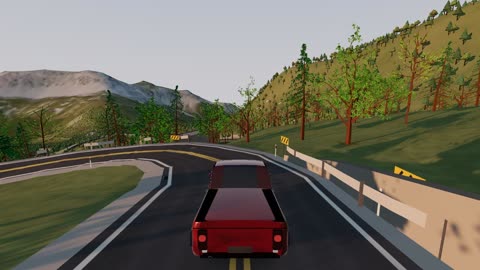
Hill climb racing: Pikes Peak, Goodwood and Shelsley Walsh
Hill climb racing explained: one car at a time against the clock up a closed road, with Pikes Peak, Goodwood, Shelsley Walsh and the European championship.
Motorsport terms: a glossary from apex to yellow flag
Plain definitions of the motorsport terms you hear on TV and in games: apex, DRS, box box, parc fermé, pace notes, stint, undercut and dozens more.
The disciplines at a glance
The International Automobile Federation (FIA), formed in 1904, governs most international car racing, while the FIM looks after motorcycles[1]. Within car racing, each discipline has its own rules, venues and kind of car. The table sorts the main ones by what decides the result.
| Discipline | Where it runs | What decides it |
|---|---|---|
| Circuit racing (F1, GT, touring cars) | Permanent or street circuits | First across the line after a set number of laps |
| Oval and stock car racing | Banked ovals, some road courses | First across the line |
| Endurance racing | Long circuits, often public roads closed for the race | Most distance in a fixed time |
| Rally | Closed public roads, one car at a time | Lowest total time over the stages |
| Rally raid | Open desert and tracks, navigated by roadbook | Lowest total time over days of stages |
| Drag racing | Straight strip, two cars side by side | First to the finish from a standing start |
| Hill climb | Uphill road, one car at a time | Fastest single run |
| Drifting | Marked course, solo or in pairs | Judges' scores |
Circuit racing: Formula 1 and its circuits
Single-seater racing puts open-wheeled cars with little bodywork on a closed circuit, with Formula 1 at the top[1]. The circuits themselves are much of the appeal: Monaco's 3.337 km street lap runs 78 laps between the barriers[2], while others are known for fast sweepers or steep hills. Our guide to F1 circuits covers what sets the classic ones apart, and the racing line explains the path drivers take through every corner.
Ovals and stock cars
In the United States, stock car racing is led by NASCAR[1]. Its tracks run from 0.25-mile short ovals to Talladega's 2.66-mile tri-oval with turns banked at 33 degrees[3]. At that speed, cars running nose to tail in each other's slipstream go faster than a car alone. See NASCAR tracks for how superspeedways, intermediates, short tracks and road courses differ.
Rally and rally raid
A rally runs one car at a time over timed special stages on closed roads, with a co-driver reading pace notes. The World Rally Championship has run since 1973 on gravel, tarmac, snow and ice[4]. Read what rally racing is for stages, notes and the Monte Carlo Rally. Rally raid stretches the idea across deserts. The Dakar Rally began from Paris in 1978 and now runs stages of up to several hundred kilometres a day, navigated by roadbook[5].
Endurance racing
Endurance races are won by covering the most distance in a fixed time, with drivers sharing each car. The 24 Hours of Le Mans, first run in 1923, is the best known. Its 13.626 km lap includes the Mulsanne Straight, broken by two chicanes since 1990[6]. Our endurance racing guide covers Le Mans, the Nürburgring, Daytona and Spa.
Drifting, drag racing and hill climbs
Three disciplines are decided by a judge or a clock rather than by passing. Drifting scores deliberate, controlled oversteer, and Formula Drift judges line, angle and style[7]. Drag racing is a straight-line sprint, usually over a quarter mile (402 m), started by a light tree[8]. Hill climbs send one car at a time up a hill. The best known, Pikes Peak, has 156 turns over 12.42 miles and finishes at 14,115 feet[9].
New to the vocabulary? The motorsport glossary defines the terms commentators use, from apex to yellow flag.
Sources
- Motorsport, Wikipedia
- Monaco Grand Prix: circuit information, Formula 1
- List of NASCAR tracks, Wikipedia
- World Rally Championship, Wikipedia
- Dakar Rally, Wikipedia
- 24 Hours of Le Mans, Wikipedia
- Drifting (motorsport), Wikipedia
- Drag racing, Wikipedia
- History of the Pikes Peak International Hill Climb, Pikes Peak International Hill Climb