
Endurance racing: Le Mans, the Nürburgring and the 24-hour classics
Endurance racing is won by covering the most distance in a fixed time, often 24 hours, with two or three drivers taking turns in each car and several classes of car on track at once. The 24 Hours of Le Mans, first run in 1923, is the best known[1].
What makes endurance racing different
A sprint race rewards the fastest car over an hour or two. An endurance race rewards the car that is fast, reliable and well run for a whole day and night. Teams plan for fuel, tyres, brakes, driver fatigue, traffic, darkness and changing weather. The car leading after six hours still has 18 hours to survive. When the clock runs out, the car that has covered the most laps wins.
Le Mans is organised by the Automobile Club de l'Ouest (ACO) and forms one leg of the informal Triple Crown of Motorsport, with the Monaco Grand Prix and the Indianapolis 500[1]. Denmark's Tom Kristensen holds the record for wins, with nine[1]. The distance record, set in 2010, is 5,410 km in 24 hours[1].
Le Mans and the Mulsanne Straight
The Circuit de la Sarthe is 13.626 km long, and much of it is the public D338 road, open to traffic most of the year[2]. Its most famous part is the Mulsanne Straight, about 6 km long in its original form[2]. In 1988 Roger Dorchy's WM P88 reached 407 km/h there[1].
Speeds that high were causing tyre and engine failures, and the FIA said it would no longer approve a circuit with a straight longer than 2 km. Before the 1990 race, two chicanes were added, splitting the straight into three parts[1][2]. At its end, cars still brake from over 320 km/h to about 100 km/h for the Mulsanne corner[2]. The Porsche Curves, the Dunlop chicane and Tertre Rouge are the other names every Le Mans fan knows[2].
How the circuits have changed for safety
Le Mans has been reshaped many times. The Porsche Curves were added in 1972 to bypass the old Maison Blanche section, a chicane went into the Dunlop curve in 1987 to cut entry speed from about 290 km/h to 180 km/h, and Tertre Rouge was rebuilt as a faster double-apex corner in 1979[2]. After Allan Simonsen's fatal crash in 2013, Tertre Rouge's radius was changed again and new tyre barriers were fitted[2]. A 1986 roundabout on the public road added a kink before the Mulsanne corner[2].
The Nordschleife has changed too: its layout before 1983 had 160 turns, against 154 today[4]. From the 2025 season, motorcycles have been banned from its public tourist laps[4].
Stints and driver changes
A stint is a spell of driving between pit stops. At Le Mans, each car must have three drivers, and no driver may drive more than four hours in any six-hour period or more than 14 hours in total[1]. Teams juggle these limits against fuel and tyre life, sometimes keeping a driver in for a double stint on the same tyres to save a stop. Driver changes are usually timed to coincide with a fuel stop, so no time is lost stopping only to swap.
A driver change is part of a pit stop: one driver climbs out, the next straps in, and the seat insert and radio plug are swapped. A crash in the dark at 3 a.m. can end a race that took a year to prepare.
Classes: fast and slow cars on one track
Endurance races run several classes together, each with its own result. Le Mans currently has three: Hypercar, LMP2 and LMGT3[1]. Hypercars are the fastest prototypes, and GT3 cars are based on road-going sports cars. Fast cars lap slower ones all race, so judging when and where to pass, or let a faster car by, is a skill in itself.
The Nürburgring 24 Hours takes this further. In 2023 it had 135 cars in 20 classes, and the starting field is now capped at 150[3]. Classes there range from GT3 cars to small production cars, and the race is mainly aimed at amateurs, with professional teams in the top class[3]. Each class has its own podium, so a team far down the overall order can still go home a winner, and the class battles often run as closely as the fight for the overall lead.
The Nürburgring 24 Hours
The ADAC introduced the Nürburgring 24 Hours in 1970[3]. It uses a combined lap of the Nordschleife and the Grand Prix circuit of over 25.3 km[3]. The Nordschleife alone is 20.832 km, with 154 turns and more than 300 m of elevation change[4]. Jackie Stewart called it the Green Hell after winning the 1968 German Grand Prix there in rain and fog[4]. With 154 turns and more than 300 m of climb and descent in a lap, it is a hard place to stay sharp through the night.
On non-race days the Nordschleife is a public toll road, open to road-legal cars from mid-March to mid-November[4]. Visitors pay to drive it under normal traffic rules, but it isn't a race.
Daytona, Spa and Bathurst
- Rolex 24 at Daytona: began in 1962 as a three-hour race, became a 24-hour race in 1966, and runs on Daytona's 3.56-mile road course[5]. It was cut to six hours in 1972, and the 1974 race was cancelled[5].
- 24 Hours of Spa: first run in 1924 on public roads in the Belgian Ardennes, it now runs for GT3 cars as part of the GT World Challenge Europe and the Intercontinental GT Challenge, on that series' calendar since its first season in 2016[6].
- Bathurst 12 Hour: run since 1991 at Mount Panorama in Australia, a 6.213 km circuit with 174 m between its highest and lowest points[7]. Its 1.916 km Conrod Straight is the fastest part of the lap, and the Skyline at the top was renamed Brock's Skyline in 1997 after nine-time winner Peter Brock[7]. Outside race weekends, Mount Panorama is a public road with a 60 km/h limit enforced by police[7].
Endurance tracks in Drive Your City
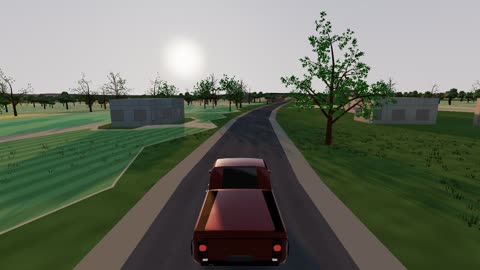
Drive Your City's World Motorsport tab has a GT & Endurance discipline. Its venues include the full 20.8 km Nürburgring Nordschleife lap, Mount Panorama, Sebring, Road Atlanta, Laguna Seca, Road America, Mosport and Phillip Island. You can also drive the Mulsanne Straight on its own page.
Set a race at night to see why night stints are hard. Press L for headlights, 0 to skip the time of day, or B for rain. The Vesper GT sports coupe, with rear-wheel drive, seven speeds and downforce, is the closest thing in the garage to a GT racer. Its specs are the game's simulation values.
Questions
How many drivers race at Le Mans?
Each car has three drivers. No driver may drive more than four hours in any six-hour period, or more than 14 hours in total.
Why were chicanes added to the Mulsanne Straight?
Speeds on the 6 km straight had passed 400 km/h, causing tyre and engine failures, and the FIA would no longer approve a straight longer than 2 km. Two chicanes were added before the 1990 race.
What are the biggest 24-hour races?
The 24 Hours of Le Mans, the Nürburgring 24 Hours, the Rolex 24 at Daytona and the 24 Hours of Spa are the best known. Each runs on a different kind of circuit with its own classes of car.
Sources
Facts on this page come from these sources, checked on 20 November 2026. Details about the game come from the game itself.
- 24 Hours of Le Mans, Wikipedia
- Circuit de la Sarthe, Wikipedia
- Nürburgring 24 Hours, Wikipedia
- Nürburgring, Wikipedia
- Daytona International Speedway, Wikipedia
- 24 Hours of Spa, Wikipedia
- Mount Panorama Circuit, Wikipedia