
Classic F1 circuits and what makes each one different
What makes a Formula 1 circuit classic is usually one defining trait: Monaco's barriers, Spa's climb through Eau Rouge and Raidillon, Suzuka's figure-eight, Monza's straights, Silverstone's high-speed sweepers or Interlagos's hills and anticlockwise lap[1][3][4][5][6][7].
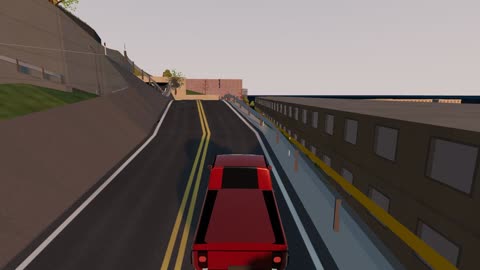
Six classic circuits side by side
The table gives the current Grand Prix layouts. Lengths change when circuits are modified, so these are the figures for the present configuration.
| Circuit | Lap | Turns | Known for |
|---|---|---|---|
| Monaco | 3.337 km | 19 | Street circuit, slowest corner in F1[1][2] |
| Spa-Francorchamps | 7.004 km | 19 | Eau Rouge and Raidillon, Ardennes hills[3] |
| Suzuka | 5.807 km | 18 | Figure-eight with a crossover bridge[4] |
| Monza | 5.793 km | 11 | Long straights, highest average speeds[5] |
| Silverstone | 5.891 km | 18 | Fast sweepers on a wartime airfield[6] |
| Interlagos | 4.309 km | 15 | Anticlockwise, hilly, Senna S[7] |
Corner counts depend on what each circuit calls a turn, so they are a guide to how busy a lap is rather than an exact measure.
Monaco: the street circuit
Monaco held its first Grand Prix in 1929 and joined the World Championship in 1950[2]. The race runs 78 laps, 260.286 km in all[2], on streets lined with barriers. The Fairmont Hairpin is the slowest corner in Formula 1, taken at about 48 km/h with full steering lock, and the tunnel is a flat-out kink at around 260 km/h[1]. Cars can lose 20 to 30 % of their downforce in the tunnel, and the change from daylight to dark cuts visibility[1]. Casino Square sits 44 m above the lowest point of the lap, and La Rascasse near the end needs full steering lock[1].
The track is narrow and tight, so passing is rare: the 2021 race had a single overtake in 78 laps[1]. The chicane after the tunnel is about the only place anyone tries. Qualifying position and pit strategy decide most results, which is why Saturday at Monaco matters more than almost anywhere else.
Spa-Francorchamps: Eau Rouge and Raidillon
Spa in the Belgian Ardennes opened in 1921, and its original public-road lap was 14.982 km[3]. Today's 7.004 km circuit still keeps the climb that defines it[3]. Strictly, Eau Rouge is the stream and the left-hander at the bottom of the valley; Raidillon is the steep uphill sweep that follows, created in 1939 when an old hairpin was bypassed[3]. Together they form a left-right-left that ends at a blind crest, with a gradient described as more than 18 % in places[3].
The long Kemmel Straight after Raidillon leads to Les Combes, a main overtaking point[3], and the fast left of Blanchimont comes late in the lap[3]. The Spa 24 Hours has been run on these roads since 1924[3].
Suzuka: the figure-eight
Suzuka opened in 1962 as a Honda test track designed by John Hugenholtz[4]. Its 5.807 km lap is a figure of eight: the back straight crosses over the front section on a bridge, which makes it the only FIA Grade 1 circuit with that layout[4].
The lap opens with the snaking S Curves, then runs through Degner, named after rider Ernst Degner, who crashed there in 1962[4]. Spoon leads onto the back straight and the fast 130R, and the Casio Triangle chicane, added in 1983, slows the cars before the pit straight[4]. Degner was split into two corners in 1987, and 130R was later rebuilt as a double-apex bend, an 85 m radius followed by a 340 m one[4]. A mistake early in the S Curves costs speed through the whole sequence.
Monza: the Temple of Speed
Monza, near Milan, opened in 1922 and is nicknamed the Temple of Speed[5]. Its 5.793 km lap has only 11 turns, joined by long straights. Max Verstappen's pole lap at the 2025 Italian Grand Prix averaged 264.681 km/h, the fastest average qualifying lap in a World Championship event, and cars passed 364 km/h at the end of the main straight[5].
Two chicanes added in 1972 break up the straights. The first, the Rettifilo, is where many first-lap accidents happen[5]. The Variante della Roggia, approached at about 330 km/h, is probably the best place to pass[5]. Teams bring their lowest-drag wings to Monza, so the cars have little grip in the remaining corners. The old banked oval, about 30 degrees steep, still stands beside the circuit but F1 stopped using it after 1961[5].
Silverstone: fast sweepers on an old airfield
Silverstone sits on a former RAF bomber station, and its wartime runways still lie inside the track outline[6]. It hosted the first race of the World Championship, the 1950 British Grand Prix[6]. The current 5.891 km lap has 18 turns[6].
Its signature is speed through corners. Copse is taken at about 290 km/h, and the left-right-left-right of Maggotts and Becketts puts more than 5g of lateral force on the driver before Chapel opens onto the Hangar Straight[6]. Stowe is a fast, blind-entry right at the end of that straight[6]. Luffield, a long 180-degree right, came from an early-1990s redesign, and Club, the final complex, is a long accelerating right where drivers unwind the steering for the best traction across the line[6].
Interlagos and Zandvoort: hills and banking
Interlagos in São Paulo opened in 1940 and has held the Brazilian Grand Prix since 1973[7]. Its 4.309 km lap runs anticlockwise and follows hilly ground rather than flat land[7]. It starts with the Senna S, a downhill left-right, and the long full-throttle climb from Junção back to Turn 1 is one of the longest on the calendar[7]. The original 1940 layout was 7.960 km with 26 turns[7]. Its official name, Autódromo José Carlos Pace, dates from 1985 and honours the Brazilian driver[7].
Zandvoort, in the dunes near the North Sea, returned to the calendar in 2021 with banked corners: 19 degrees at the Hugenholtzbocht and 18 degrees through the last two turns[8]. The circuit opened in 1948, and the Dutch Grand Prix ran there from 2021 until its deal with Formula 1 ended in 2026[8].
Drive these circuits in Drive Your City
In Drive Your City's World Motorsport tab, the Formula discipline is about downforce and braking zones. Its open venues include Suzuka, Spa-Francorchamps, Monza, Silverstone, Interlagos, Zandvoort, Barcelona-Catalunya, Yas Marina and many more, with laps taken from open map data to within 4 % of the official length. The game names venues by place, such as "Suzuka figure-eight", "Francorchamps hills" and "Monza park". Drive Your City is independent, with no link to Formula 1, the FIA or any circuit. Real names here only say where each track is.
Several circuits also have their own drive pages: Monza, Silverstone, Interlagos, Zandvoort, Barcelona-Catalunya, Yas Marina, Marina Bay, Circuit Gilles Villeneuve and Mexico City. You can also drive Monaco's streets on the Monaco street circuit page, Fairmont Hairpin included. Championships are scored 25-18-15-12-10-8-6-4-2-1, as in the player guide.
Questions
What is the fastest F1 circuit?
Monza. Max Verstappen's pole lap at the 2025 Italian Grand Prix averaged 264.681 km/h, the fastest average qualifying lap recorded in a World Championship event.
What is the difference between Eau Rouge and Raidillon?
Eau Rouge is the stream and the left-hand corner at the bottom of the valley at Spa. Raidillon is the steep uphill sweep that follows it. People often use Eau Rouge for the whole sequence.
Why is it so hard to overtake at Monaco?
The street circuit is narrow, lined with barriers and full of slow corners, so there is almost nowhere to pass. The 2021 race had just one overtake in 78 laps, so qualifying and pit strategy usually decide the result.
Why is Suzuka a figure-eight?
It was designed in 1962 as a Honda test track, and its back straight crosses over the front part of the lap on a bridge. It is the only FIA Grade 1 circuit laid out that way.
Sources
Facts on this page come from these sources, checked on 20 November 2026. Details about the game come from the game itself.
- Circuit de Monaco, Wikipedia
- Monaco Grand Prix: circuit information, Formula 1
- Circuit de Spa-Francorchamps, Wikipedia
- Suzuka International Racing Course, Wikipedia
- Monza Circuit, Wikipedia
- Silverstone Circuit, Wikipedia
- Interlagos Circuit, Wikipedia
- Circuit Zandvoort, Wikipedia