
Defensive driving: space, observation and planning ahead
Defensive driving means driving so that your own mistakes, and other people's, do not turn into crashes. In practice it comes down to looking far ahead, keeping space around the car, expecting others to err and removing distractions[1].
What defensive driving means
New York's driver's manual defines defensive driving as driving in a way that prevents your own mistakes and guards against the mistakes of others[1]. Its examples are blunt: assume a driver waiting at a stop or give-way sign on a side road may not stop, and decide in advance what you would do if they pulled out[1].
None of this is about driving timidly. It is about building in time and space so that when something unexpected happens, you have room to deal with it calmly.
Look further ahead
California's handbook tells drivers to scan the road at least 10 seconds ahead[2]. At 30 mph that is about 130 metres; on a motorway, far more. Looking that far gives you warning of brake lights, a bus pulling out or a ball rolling into the road before they become emergencies.
Behind and beside you matter too. New York's manual asks drivers to check mirrors every few seconds[1], and the UK Highway Code builds mirror checks into its Mirrors, Signal, Manoeuvre routine, used well before you signal or change speed or direction[5]. Mirrors have blind spots, so look round as well: California tells drivers to check them by turning their head before changing lanes, merging, reversing or opening a door[2][5].
Keep a space cushion
Space is the defensive driver's main tool, and the gap to the vehicle ahead is the easiest to control. Rear-end collisions make up four of every 10 crashes, according to New York's manual[1]. To measure your gap, note when the vehicle ahead passes a fixed point, such as a sign, and count the seconds until you reach it[1].
| Where | Normal conditions | Bad conditions |
|---|---|---|
| UK (Highway Code) | At least 2 seconds on fast roads | Double in the wet, up to 10 times on ice[3] |
| New York | 2 seconds | At least 3 to 4 seconds, and behind large trucks[1] |
| California | 3 seconds | More with a tailgater behind or on slippery roads[2] |
Keep space to the sides too. California advises against driving alongside other vehicles for long, and leaving room for traffic joining a freeway[2]. In an emergency, space to one side is your escape route[1].
Manage speed
A speed limit is a maximum, not a target. The Highway Code tells drivers to slow down for bends, vulnerable road users, bad weather and darkness, and to drive at a speed that lets them stop within the distance they can see to be clear[3]. Expect the unexpected beyond a blind bend, such as a stopped vehicle or a blocked road, and adjust before you reach it[3].
Plan for the people most at risk
The UK Highway Code sets out a hierarchy of road users: those driving vehicles that can do the most harm carry the greatest responsibility to reduce the danger to others[4]. It also asks drivers to anticipate pedestrians and cyclists, especially children who may step out without looking[3].
When overtaking a cyclist, the Highway Code asks for at least 1.5 metres at speeds up to 30 mph and more at higher speeds, and for drivers to wait behind if they cannot give that room[5].
Remove distractions
In Great Britain it is illegal to use a hand-held phone at the wheel for almost any purpose, even when stopped at lights or in a queue. The penalty is 6 points and a £200 fixed penalty, and new drivers who reach 6 points within two years of passing lose their licence[7]. Hands-free use is legal but still distracting; the Highway Code advises stopping somewhere safe or letting calls go to voicemail[3].
Other distractions add up: loud music, adjusting controls, eating, and arguing with passengers all take attention away from the road[3].
Be fit to drive
Defensive driving starts before you get in. New York's manual advises a stop every 100 miles or two hours on long trips, a nap of 15 to 45 minutes if you feel drowsy, and at least 15 minutes after waking before driving again, noting that caffeine takes about 30 minutes to work[1]. Tiredness slows reactions and dulls judgement, which undoes every other habit on this page.
Tailgaters and aggressive drivers
If someone follows too closely, make it easy for them to pass. New York's manual suggests changing lanes if you can, or slowing and pulling off to let them go, while avoiding sudden braking[1]. California's handbook says to keep a steady speed and move right when it is safe[2]. Leave a bigger gap ahead, so that if you must slow, you can do it gently.
With an aggressive driver, New York's advice is not to make eye contact, which can be taken as a challenge, not to return gestures, and to move away safely[1].
A system for every hazard: IPSGA
UK police drivers learn a structured approach from Roadcraft, which IAM RoadSmart and RoSPA also base their advanced training on. Its system has five phases, summed up as IPSGA[6]:
- Information: keep observing and signalling throughout.
- Position: place the car for safety and view.
- Speed: match speed to the hazard so you can stop in the distance you can see.
- Gear: choose the gear that gives full control.
- Acceleration: drive smoothly through and away from the hazard.
Junctions and roundabouts
Junctions are where paths cross, so they need the most care. The Highway Code asks drivers to be ready for vehicles emerging, especially from unmarked junctions on side roads and country lanes[3], and not to overtake at or near junctions[5]. New York's manual reminds drivers to give way on entry to a roundabout and keep to 30 mph (50 km/h) or less inside it[1]. Make eye contact with drivers waiting to pull out where you can, but do not rely on it: assume they may not have seen you[1].
Defensive habits in Drive Your City
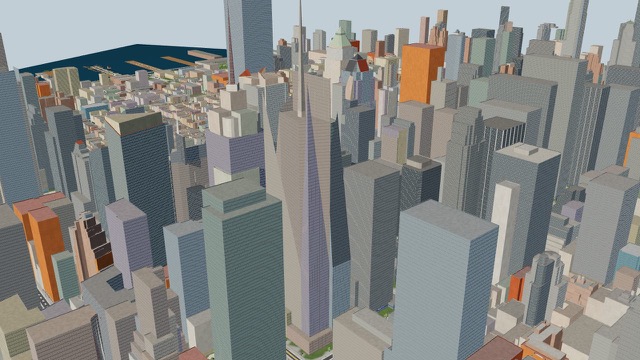
Real cities in the game have traffic (cars, buses, scooters and street racers) and pedestrians, so they are a useful place to practise reading the road a long way ahead and keeping a gap. Clean driving adds to your score combo, and police are optional in free roam; when switched on, they chase, raise heat levels and fine you in game cash (see police chases).
Press O for autodrive and watch how the car keeps its distance in traffic, or read the traffic and autodrive guide and the city life guide. New York is busy enough to test any driver's patience.
Questions
What is the two-second rule?
Leave at least two seconds between you and the vehicle ahead: when it passes a fixed point, count, and you should not reach that point before two seconds have passed.
Is it a two-second or a three-second rule?
It depends where you drive. The UK Highway Code and New York teach two seconds; California teaches three. All say to increase it in bad conditions.
What are the main defensive driving techniques?
Look far ahead, keep space around the car, expect other road users to make mistakes, manage your speed, and remove distractions such as your phone.
Sources
Facts on this page come from these sources, checked on 20 November 2026. Details about the game come from the game itself.
- New York State Driver's Manual, Chapter 8: defensive driving, New York State DMV
- California Driver's Handbook: Section 8, safe driving, California DMV
- The Highway Code: general rules, techniques and advice for all drivers and riders (103 to 158), Highway Code (GOV.UK)
- The Highway Code: introduction and the hierarchy of road users, Highway Code (GOV.UK)
- The Highway Code: using the road (159 to 203), Highway Code (GOV.UK)
- Roadcraft, Wikipedia
- Mobile phones, THINK! (Department for Transport)