
Night driving: headlights, glare, eyesight and tiredness
At night, drive so you can stop within the distance your headlights light up, dip your lights for others, look away from oncoming glare towards the edge of your lane, and stop for a break before tiredness sets in: the Highway Code asks for at least 15 minutes every two hours[1][2][3].
Why night driving is harder
In the dark you see less, later, and with less colour and contrast. Recovering from oncoming glare can take several seconds[3], and tiredness is a bigger risk at hours when you would normally be asleep[4]. People walking are much harder to see: in the US, NHTSA's 2024 figures show 76 % of pedestrian deaths happened in the dark, against 20 % in daylight[5].
Headlights: the UK rules
The Highway Code defines night as the period from half an hour after sunset to half an hour before sunrise. Between sunset and sunrise you must show sidelights and rear number-plate lights, and at night you must use headlights except on roads with lit street lights[1]. In built-up areas, use dipped headlights at night, and in dull daytime weather too[1].
You must not use lights that dazzle other road users, including pedestrians, cyclists and horse riders. When overtaking, keep dipped beam until you are level with the other vehicle, then use main beam if it will not dazzle oncoming traffic[1]. If oncoming lights dazzle you, slow down and, if necessary, stop[1].
High beams in the US
US states set their own rules. Georgia's manual, for example, puts low beams at about 250 feet of reach and high beams at about 350 to 500 feet, and tells drivers to dim high beams within 500 feet of an oncoming vehicle and within 500 feet of a vehicle they are following[3]. Check your own state's handbook for its distances.
Don't out-drive your headlights
The key night habit is speed matched to sight. Georgia's manual and California's handbook both tell drivers to keep speed low enough to stop within the distance their headlights light up[3][6]. On a dark road, a hazard often appears only at the edge of the beam; if you cannot stop in that distance, you are going too fast for the light you have.
Glare makes it worse. Georgia notes that even two seconds of glare blindness at 55 mph covers more than half a football field[3]. Slow down when oncoming lights are bright, and leave a bigger gap to the vehicle ahead.
Fog at night
Fog and darkness together cut sight to almost nothing. In the UK you must use headlights when visibility is seriously reduced, generally under 100 metres, and you must not use fog lights unless it is[8]. Main beam in fog reflects back off the water droplets, so dipped beam usually shows more of the road. Slow down until you can stop within the distance you can see[8].
Handling glare
Do not look straight into oncoming lights. Georgia's manual says to look towards the right edge of the road or the lane markings until the vehicle passes[3]; that is the nearside edge in a country that drives on the right, so in a keep-left country such as the UK the equivalent is the left edge.
Your car can cut glare too. AAA suggests dimming the dashboard and screen, cleaning the inside of the windscreen, where film scatters light, having headlights aimed correctly, and taking sunglasses off once the sun is down[7]. The Highway Code says not to wear tinted glasses or lenses at night[2], and RoSPA notes that tinted "night driving" glasses cut the light reaching your eyes[4].
Eyesight
In the UK you must be able to read a number plate from 20 metres in good daylight, wearing glasses or lenses if you need them, and the police can test you at the roadside[2]. RoSPA recommends an eyesight test at least every two years, or more often if your optician advises, and suggests that drivers who struggle at night cut back on night driving and get professional advice[4].
Tiredness
Fatigue is a bigger night-time risk than most drivers think. RoSPA cites research suggesting it may contribute to up to 20 % of road collisions and up to a quarter of fatal and serious ones, with the risk greatest on long, monotonous roads such as motorways[4].
The Highway Code's advice is to avoid setting off tired, avoid long journeys between midnight and 6 am, and take a break of at least 15 minutes every two hours[2]. If you feel sleepy, stop somewhere safe; RoSPA suggests two cups of caffeinated coffee and a short nap, and finding somewhere to stop overnight if you are still tired[4]. Opening a window or turning up the radio does not replace rest[4].
Before a night drive
A few checks make a big difference after dark. Clean the headlights, the windscreen inside and out, and the mirrors; dirt on the glass scatters light into your eyes[7]. Make sure every bulb works, since your sidelights and rear number-plate lights must be on between sunset and sunrise[1]. If your headlights look dim or seem to point at the ground, have them aimed: AAA suggests following the owner's manual or a repair shop[7].
Being seen at night
Lights are also how others see you. Use dipped headlights in dull weather as well as at night[1]. In a stationary queue, the Highway Code suggests setting the parking brake and releasing the footbrake so your brake lights do not dazzle the driver behind[1]. Hazard warning lights are for when you are stopped and temporarily blocking traffic; in the UK you should not use them while moving, except on a motorway or unrestricted dual carriageway to warn of a hazard ahead[1].
Leave more space to the vehicle ahead than you would by day, because you see less and react later[7]. Give pedestrians and cyclists extra room: they are much harder to spot, and dark clothing can hide a person until they are close.
Night in Drive Your City
Press 0 to skip the time of day until night, when street lamps and neon come on and night racers appear. Press L for headlights. The weather and time of day guide covers both, and adding fog with B shows how quickly sight shrinks.
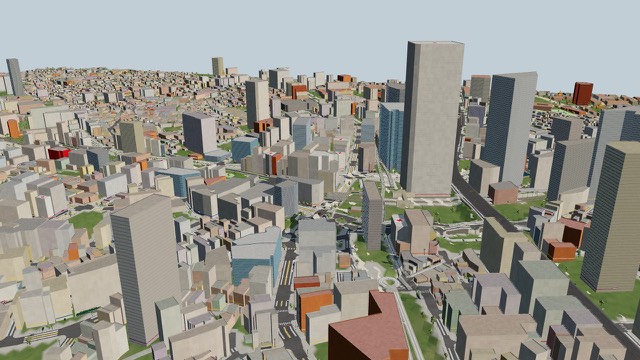
Try a dark, unlit road and a lit city side by side: how far ahead you can read a bend changes how fast you can sensibly take it. Tokyo at night is full of light and traffic; the Col de Turini rally stage in World Motorsport is run at night on a mountain road.
Questions
When must I use headlights in the UK?
At night, from half an hour after sunset to half an hour before sunrise, except on roads with lit street lights, and whenever visibility is seriously reduced.
How do I avoid being dazzled at night?
Look away from oncoming lights towards the nearside edge of your lane, slow down, and stop if you need to; a clean windscreen also reduces glare.
Are yellow night driving glasses a good idea?
RoSPA says tinted lenses reduce the light reaching your eyes, and the Highway Code advises against tinted glasses at night.
How often should I stop on a long night drive?
The Highway Code recommends a break of at least 15 minutes every two hours, and stopping sooner if you feel sleepy.
Sources
Facts on this page come from these sources, checked on 20 November 2026. Details about the game come from the game itself.
- The Highway Code: general rules, techniques and advice for all drivers and riders (103 to 158), Highway Code (GOV.UK)
- The Highway Code: rules for drivers and motorcyclists (89 to 102), Highway Code (GOV.UK)
- Drivers Manual Section 2.11: driving at night, Georgia Department of Driver Services
- Fit to drive: driver health, RoSPA
- Pedestrians: 2024 data (Traffic Safety Facts), NHTSA
- California Driver's Handbook: Section 8, safe driving, California DMV
- Driving at night: the do's and don'ts, AAA (The Auto Club Group)
- The Highway Code: driving in adverse weather conditions (226 to 237), Highway Code (GOV.UK)