
Driving in snow and ice: preparation, grip and stopping distances
On snow and ice, the first question is whether you need to go at all: the UK Highway Code says not to drive in these conditions unless your journey is essential[1]. If you must, clear every window, leave up to ten times your normal gap, and make every input slow and gentle.
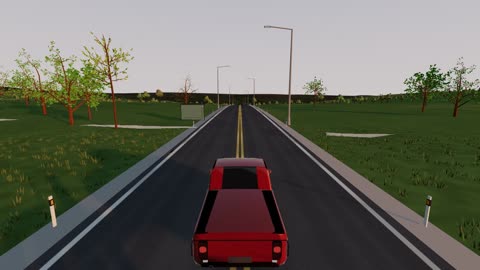
First, do you need to go?
The Highway Code asks drivers to check forecasts for ice and snow warnings and not to drive in those conditions unless the journey is essential. If it is, allow extra time and carry a kit: de-icer and scraper, torch, warm clothing, first-aid kit, jump leads, a shovel, and food and a warm drink[1]. NHTSA's US list is similar, adding sand or cat litter for traction, blankets, water and a phone charger, and it suggests keeping the fuel tank close to full in case you are held up[4].
Before you set off
In the UK you must be able to see, so you must clear all snow and ice from every window, keep your lights clean and your number plates readable[1]. Clear the mirrors, demist the windows fully and brush snow off the roof, where it can slide onto your windscreen or fly off onto other road users[1]. Check your route for delays and further severe weather before you leave[1].
Visibility in falling snow
Falling snow hides you as much as it hides the road. AAA advises low-beam headlights even in daylight in winter weather, and pulling fully off the road and stopping if you cannot see ahead[3]. In the UK you must use headlights when visibility is seriously reduced, generally below 100 metres[1]. Keep the washer bottle full of a winter screenwash and clear snow that builds up on lights and the number plate at each stop.
Grip and stopping distances
Snow and ice take away most of the tyres' grip. The Highway Code says stopping distances on snow or ice can be up to ten times longer than on dry roads, and asks for a gap up to ten times greater on icy roads[1][2]. On a road where you would leave two seconds in the dry, that can mean twenty.
US advice uses different numbers for the same idea. AAA suggests at least six seconds of following distance in winter weather[3], and California's handbook tells drivers to halve their speed on packed snow and to drive no faster than 5 mph on ice[5].
Gentle inputs
On ice, the Highway Code asks you to drive extremely carefully and avoid sudden actions. Use a low speed in the highest gear you can, accelerate and brake very gently, slow down well before bends and steer smoothly[1]. You can test grip by braking gently somewhere safe[1].
Pull away gently, with as few revs as you can. If the wheels spin, ease off and try again more softly; a higher gear than usual sends less torque to the tyres, which helps explain the Highway Code's advice to use the highest gear you can manage[1].
Two warning signs point to ice: steering that suddenly feels light, and tyres that go quiet, because tyres on ice make almost no noise[1]. AAA adds two habits: brake first, then turn, never both at once, and avoid cruise control in winter conditions[3].
Hills
Hills are where snow catches drivers out. AAA's advice is to avoid stopping partway up a steep hill, to build momentum on the flat before the climb, and to go down slowly[3]. On the way down, a low speed from the top is much easier to hold than speed you try to scrub off halfway.
Braking, ABS and skids
With ABS, press the brake firmly and keep the pressure on; California's handbook gives this advice for four-wheel ABS[5]. ABS keeps the wheels turning so you can steer, but it does not guarantee a shorter stop: on deep snow a locked wheel can dig in and stop sooner, so ABS can lengthen the distance, and on sheet ice it can be overwhelmed[7]. The real aim is to leave so much space that you never need full braking at all.
If the car skids, the Highway Code says to release the brake or ease off the accelerator and steer into the skid[2]. AAA's version is to avoid slamming the brakes and keep looking and steering where you want to go[3].
Winter tyres, gritters and snowploughs
Tyre rules vary widely. In Québec, for example, vehicles registered in the province must have winter tyres from 1 December to 15 March, and a tyre counts only if it carries the mountain-and-snowflake symbol or is studded[6]. Other countries and regions have their own rules, or none, so check before travelling.
Take care overtaking gritters, and do not overtake a snowplough unless the lane ahead is clear[1]. NHTSA warns that ploughs can throw up a cloud of snow that cuts visibility to zero faster than you can react[4].
If you get stuck
NHTSA's advice for a stranded driver is to stay with the vehicle and not overexert yourself, make the car visible with a bright marker and the interior light, clear snow from the exhaust pipe, and run the engine only now and then to keep warm, to avoid carbon monoxide build-up[4]. That is why its kit list includes a phone and car charger, blankets, water and food: help can take hours to arrive in a snowstorm, and staying warm and reachable in the car is safer than walking for help[4].
Winter guidance at a glance
| Source | Advice |
|---|---|
| UK Highway Code | Stopping distances up to ten times longer on snow and ice; gap up to ten times greater on icy roads[1][2] |
| AAA (US) | At least six seconds behind the vehicle ahead; brake, then turn; no cruise control[3] |
| California DMV | Halve your speed on packed snow; no more than 5 mph on ice[5] |
| NHTSA | Avoid driving if conditions are hazardous; keep the tank close to full[4] |
Conditions can change quickly, even on treated roads, so keep checking travel bulletins and the messages on overhead signs as you go[1].
There is no snow or ice in Drive Your City
To be clear: the game has no snow or ice, so it cannot teach winter driving. Its closest low-grip practice is rain and storms, which make the road slippery, and fog, which cuts how far you can see; press B to change the weather (see the weather guide).
Off-road surfaces such as grass, dirt and sand also give less grip than tarmac (see terrain and off-road). The Ridgeway 4x4 has mud tyres and low range, the Bastion SUV has full-time all-wheel drive and the Gravel Ghost rally car is built for loose surfaces. Practising gentle throttle and early braking there is the nearest the game gets to winter roads.
Questions
How much longer is stopping distance on ice?
The UK Highway Code says stopping distances on snow or ice can be up to ten times longer than on a dry road.
Do I legally need winter tyres?
It depends on where you drive. Québec, for example, requires them from 1 December to 15 March; check the rules for your country or region.
What should I do if I get stranded in snow?
NHTSA advises staying with your vehicle, making it visible, clearing snow from the exhaust and running the engine only now and then to stay warm.
Does Drive Your City have snow?
No. The game has rain, storms and fog, and off-road surfaces with less grip, but no snow or ice.
Sources
Facts on this page come from these sources, checked on 20 November 2026. Details about the game come from the game itself.
- The Highway Code: driving in adverse weather conditions (226 to 237), Highway Code (GOV.UK)
- The Highway Code: general rules, techniques and advice for all drivers and riders (103 to 158), Highway Code (GOV.UK)
- Winter weather ahead: driving safety tips, AAA Oregon/Idaho
- Winter weather driving tips, NHTSA
- California Driver's Handbook: Section 8, safe driving, California DMV
- Requirements for winter tires, Gouvernement du Québec
- Anti-lock braking system, Wikipedia