
Braking technique: stopping distances, ABS, engine braking and trail braking
Good braking on the road is early, progressive and in a straight line: build pressure as you slow and ease off just before you stop. In an emergency, press firmly and hold it; with ABS the car will keep steering while it pulses the brakes for you[1].
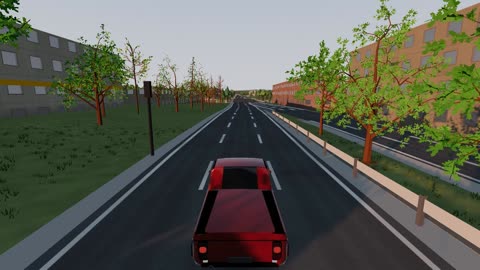
Brake early, brake smoothly
The Highway Code's everyday advice is to brake early and lightly, increase the pressure as you slow, and ease off just before the car stops so the stop is not jerky[1]. A gentle start lets load move onto the front tyres before you ask them for full effort.
In an emergency, brake immediately, but not so hard that the wheels lock[1]. A locked wheel slides rather than rolls, and a sliding front wheel cannot steer. After driving through deep water, test the brakes at the first safe chance and, if they feel weak, dry them with light pressure while driving slowly[1].
Stopping distances
Total stopping distance is thinking distance, covered before your foot reaches the pedal, plus braking distance. Thinking distance grows in proportion to speed; braking distance grows with the square of speed, so doubling your speed roughly quadruples it[2]. The UK Highway Code publishes typical totals for a car on a dry road[2]:
| Speed | Total stopping distance |
|---|---|
| 20 mph | 12 m (40 ft) |
| 30 mph | 23 m (75 ft) |
| 40 mph | 36 m (118 ft) |
| 50 mph | 53 m (175 ft) |
| 60 mph | 73 m (240 ft) |
| 70 mph | 96 m (315 ft) |
Going from 30 to 60 mph more than triples the distance. The Highway Code turns this into rules: drive so you can stop within the distance you can see to be clear, never follow closer than the overall stopping distance, and keep at least a two-second gap on fast roads, doubled on wet roads and up to ten times greater on icy ones[1]. Other countries teach different gaps; see defensive driving.
Threshold braking
Threshold braking means braking in a straight line at the maximum the tyres can take, right at the point just before a wheel would lock[7]. It is done in a straight line because a tyre's grip is shared between slowing and turning: a tyre using all its grip to stop has none left for steering[8].
On a car without ABS, threshold braking is the skill that gives the shortest controlled stop, and it takes practice to feel. If the wheels do lock in a car without ABS, California's handbook says to pump the brakes until you reach a safe speed[4]. Most modern cars have ABS, which does this job for you.
How ABS works, and what it does not do
An anti-lock braking system has a speed sensor at each wheel. When the control unit sees a wheel slowing so fast that it is about to lock, it signals valves in that wheel's brake line to hold or release pressure, then a pump restores it. Some systems cycle up to 15 times a second, which you feel as a pulsing pedal[3].
What ABS does: it stops the wheels locking, so you can still steer while braking hard[3]. What you should do: press the pedal firmly and keep the pressure on until you have slowed enough, without pumping[1][4]. The pulsing is normal.
What ABS does not do:
- It does not promise a shorter stop. The Highway Code warns not to assume ABS reduces stopping distance[1].
- On loose gravel or deep snow it can lengthen stops, because a locked wheel digs in. A 1999 NHTSA test found stopping distances on loose gravel about 27 % longer with ABS[3].
- It cannot create grip. On sheet ice it can be overwhelmed when several wheels lock at once[3].
Engine braking
Lifting off the accelerator in a petrol car closes the throttle, and the engine has to pump against the resulting vacuum, which slows the car. Diesels without a throttle give less of this effect[6]. Using it on a long descent, by selecting a lower gear or the low range on an automatic, takes load off the foot brake and keeps the brakes cooler for when you need them[6]. The Highway Code tells drivers to select a lower gear before a long downhill to help control speed[5].
The opposite habit, coasting in neutral or with the clutch down, removes engine braking, lets the car speed up downhill and makes the right gear harder to pick[1]. Electric cars use regenerative braking instead: the motor acts as a generator, slowing the car while charging the battery[6].
Trail braking: a track technique
Trail braking blends the end of braking into the start of the turn. A racing driver brakes hard in a straight line, begins releasing the pedal just before turn-in, keeps some brake on as the steering goes in, and reduces it as the steering angle grows, so the car is fully off the brakes just before the apex[7].
It works because the remaining brake keeps load on the front tyres, which helps the car rotate and lets the driver get on the throttle sooner[7]. Held too long, it leaves the rear too light and the car oversteers[7]. It takes a lot of seat time to judge, and coaches teach it on circuits. It has no place on a public road, where braking should be finished before the bend.
If you have to brake in a bend
Because a tyre's grip is shared between slowing and turning, braking hard in the middle of a bend asks the tyres for two jobs at once[8]. On the road, the better habit is to judge the bend early and lose speed before it, so that you can drive through with light, steady throttle. If something forces you to slow mid-bend, brake gently and progressively rather than stamping on the pedal, and keep the steering smooth.
The Highway Code's wider rule covers this too: drive at a speed that lets you stop within the distance you can see to be clear[1]. On a blind bend, that distance can be short.
Practise braking points in Drive Your City
In the game, S brakes and then reverses, and Space is the handbrake. ABS stays on whatever you choose for Stability assists in the game settings, so you can concentrate on where you brake rather than on locking wheels.
Circuits are the best place to learn braking points. Monza has long straights into tight chicanes, and the Formula discipline in World Motorsport is built around downforce and braking zones. Pick a fixed marker, brake at it every lap, and move it a little each time. The Flux electric car has one gear and regenerative braking, so lifting off feels different from a petrol car.
Questions
Should you pump the brakes if your car has ABS?
No. Press the pedal firmly and keep the pressure on; the system pulses the brakes for you, and pumping works against it.
Does ABS make you stop shorter?
Not always. Its main job is to let you keep steering under hard braking; on loose gravel or deep snow it can even lengthen the stop.
What is the stopping distance at 70 mph?
The UK Highway Code gives a typical total of 96 metres on a dry road, including thinking distance.
Is trail braking safe on the road?
No. It is a track technique for experienced drivers on closed circuits; on public roads braking should be finished before you turn.
Sources
Facts on this page come from these sources, checked on 20 November 2026. Details about the game come from the game itself.
- The Highway Code: general rules, techniques and advice for all drivers and riders (103 to 158), Highway Code (GOV.UK)
- Braking distance, Wikipedia
- Anti-lock braking system, Wikipedia
- California Driver's Handbook: Section 8, safe driving, California DMV
- The Highway Code: using the road (159 to 203), Highway Code (GOV.UK)
- Engine braking, Wikipedia
- How to trail brake: what trail braking is and why it's fast, Driver61
- Circle of forces, Wikipedia