
Hill climb racing: Pikes Peak, Goodwood and Shelsley Walsh
Hill climb racing sends cars up a closed road one at a time against the clock, and the fastest single run wins. The courses range from Shelsley Walsh's 1,000 yards in England to Pikes Peak's 12.42 miles and 156 turns in Colorado[1][4].
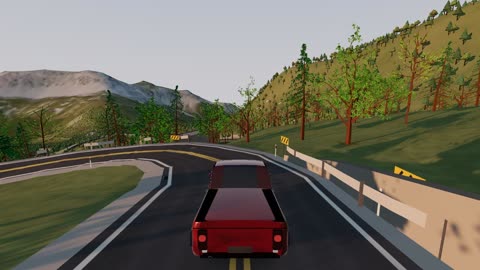
How a hill climb works
A hill climb is a timed run from a start line at the bottom to a finish near the top. Each driver runs alone, on a road closed for the event[5][6]. There is no wheel-to-wheel racing and no co-driver. Formats vary, but events usually mix practice runs with timed runs, and cars are grouped into classes. Entries range from touring cars to single-seaters: in Europe the classes include single-seaters, sports prototypes, silhouettes and touring cars[5].
It looks simple but punishes mistakes. Courses are short, so a wide line through one hairpin can decide a result. Drivers can't learn the road lap after lap, and there is no second chance once a run is under way.
Hill climbs, rallies and circuit races compared
| Hill climb | Rally | Circuit race | |
|---|---|---|---|
| Cars running at once | One | One | The whole field |
| Course | A single uphill road | Many stages, up and down | Laps of one track |
| Learning the road | Practice runs | Recce and pace notes | Practice and many laps |
| Result | Fastest timed run | Lowest total stage time | First across the line |
Rally is the closest relative: both race the clock on closed roads, but a rally adds many stages, pace notes and a co-driver, while a hill climb is one short sprint. A hill climb asks for full commitment from the first metre. Each run is short, the road keeps changing gradient and camber, and there are no later laps to make up for a slow corner. Drivers who do well tend to be the ones who can drive a road they have only seen a few times as if they knew it by heart.
Pikes Peak: the Race to the Clouds
The Pikes Peak International Hill Climb in Colorado was first held in August 1916, and its organisers call it the second-oldest motorsport race in America[1]. The course is 12.42 miles long with 156 turns. It starts at 9,390 feet and finishes at the 14,115-foot summit[1], an average gradient of about 7.2 %[2]. The start is at mile 7 of the Pikes Peak Highway, and the course climbs 4,720 feet to the finish[2]. The event is also known as the Race to the Clouds[2].
For most of its history much of the road was gravel. The highway was fully paved by August 2011, and 2012 was the first race run entirely on asphalt[2]. Motorcycles were part of the event until a rider, Carlin Dunne, was killed in 2019; after a review, motorcycle racing was ended[2]. Cars now compete in divisions including Unlimited, Time Attack, Open Wheel and Pikes Peak Open, plus an Exhibition class for vehicles that fit none of the others[2]. Before the record fell to electric cars, Rhys Millen had set 9:46.164 in 2012 in a Hyundai Genesis Coupe[2].
Records at Pikes Peak
Breaking time barriers is part of the event's history[1][2]:
| Year | Driver | Car | Time |
|---|---|---|---|
| 2011 | Nobuhiro Tajima | Suzuki | 9:51.278, first run under 10 minutes |
| 2013 | Sébastien Loeb | Peugeot 208 T16 Pikes Peak | 8:13.878, first under 9 minutes |
| 2018 | Romain Dumas | Volkswagen I.D. R Pikes Peak (electric) | 7:57.148, current record |
Electric cars on the hill
Hill climbs have become a showcase for electric cars. Nobuhiro Tajima, who won six overall titles at Pikes Peak with Suzuki cars between 2006 and 2011, set 9:46.530 in an electric car in 2013[2]. Rhys Millen won overall in 2015 in an electric car with 9:07.222[2]. Electric entries kept breaking powertrain records until Dumas's Volkswagen took the outright record in 2018[2], the first run under eight minutes. At Goodwood, an electric car broke a record that had stood for about 20 years[3], taking it from a Formula 1 car to a small electric prototype.
Goodwood Festival of Speed
The Festival of Speed was founded in 1993 by Lord March, now the Duke of Richmond, to bring motor racing back to the Goodwood estate[3]. Its hill climb is about 1.86 km long with nine turns, climbing 92.7 m at an average gradient of about 4.9 %[3].
For about 20 years the record was Nick Heidfeld's 41.6 seconds in a McLaren MP4/13 Formula 1 car, set in 1999[3]. In 2022 Max Chilton went up in 39.08 seconds in the electric McMurtry Spéirling[3].
Shelsley Walsh
Shelsley Walsh in Worcestershire held its first hill climb on 12 August 1905 and is described as the third-oldest motorsport event in the world[4]. The first event used 992 yards, and the course was standardised at 1,000 yards (914 m) in 1907[4]. It rises 328 feet (100 m) over that distance, an average gradient of about 1 in 9, with a steepest section of about 1 in 6, or 16 %[4]. The fastest runs take about 22 seconds, so a few hundredths can separate the top drivers[4]. That makes it a sprint of a fraction of the length of Pikes Peak's 12.42 miles[1].
The European Hill Climb Championship
The first European hill climb championship ran from 1930 to 1933 under the AIACR, the forerunner of the FIA[5]. Today the FIA European Hill Climb Championship runs on closed public mountain roads across the continent, with each driver competing alone from the bottom of the course to a finish near the top[5]. The 2026 calendar ran from Rechberg in Austria in April to Buzet in Croatia in September[5]. Early champions included Rudolf Caracciola and Hans Stuck in the 1930s[5]. Rounds run on closed roads in countries from Austria to Croatia, a weekend at a time[5], and drivers score points across the season rather than at a single event.
Since 2020, a Performance Factor system has grouped cars into Category 1, for Groups 1 to 5, and Category 2, for single-seaters and sports cars[5].
Hill climbs in Drive Your City
Drive Your City's World Motorsport tab has a Hill Climb discipline: one run to the summit, ranked against the field's times. Its venues are the Stelvio Pass in the Italian Alps, the Jebel Jais road in the UAE and Hakone in Japan. The hills come from real open elevation data, so the gradients and hairpins are where they are on the real road.
A car with grip and traction out of slow corners suits these roads, such as the Gravel Ghost with all-wheel drive. Press R to reset onto the road if you run wide, and C for the cockpit camera to see the hairpins as a driver would.
Questions
What is the Pikes Peak hill climb record?
7 minutes 57.148 seconds, set by Romain Dumas in the electric Volkswagen I.D. R Pikes Peak in 2018.
How long is the Pikes Peak course?
12.42 miles with 156 turns, starting at 9,390 feet and finishing at the 14,115-foot summit.
Is Hill Climb Racing the same as real hill climbing?
No. Hill Climb Racing is also the name of a mobile game. Real hill climbing is a motorsport where drivers race the clock up a closed road, one at a time.
Sources
Facts on this page come from these sources, checked on 20 November 2026. Details about the game come from the game itself.
- History of the Pikes Peak International Hill Climb, Pikes Peak International Hill Climb
- Pikes Peak International Hill Climb, Wikipedia
- Goodwood Festival of Speed, Wikipedia
- Shelsley Walsh Speed Hill Climb, Wikipedia
- European Hill Climb Championship, Wikipedia
- Motorsport, Wikipedia
- The Highway Code: general rules, techniques and advice for all drivers and riders (103 to 158), GOV.UK