
Touge: what it means, where it came from and the roads behind it
Touge (峠, tōge) is Japanese for a mountain pass. In car culture it also means the twisting roads over those passes and the street racing that grew up on them from the 1970s, which is illegal and dangerous on public roads. The best-known touge roads, such as Irohazaka, Mount Haruna and the Hakone Turnpike, are ordinary public roads you can drive at legal speeds.
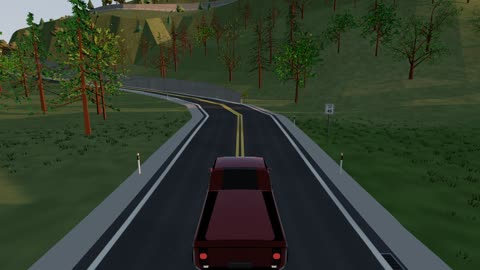
What touge means
The word itself just means a mountain pass. Among drivers it came to stand for the narrow, winding roads that cross Japan's mountains, and for a style of racing on them, run either one car at a time or as a chase[1]. The drivers were known as hashiriya, street racers, who met on weekend nights on steep hill roads[2].
Touge driving is about corners rather than top speed. A pass road rewards a car that is light and balanced, which is why mass-market Japanese sports cars that owners modified themselves, such as the Toyota AE86 and Mazda RX-7, became the culture's best-known cars[2].
How the culture grew
Motorcycles came first. From the 1970s to the 1990s, sportbike riders crowded mountain roads, leaning so hard into corners that they scraped their knees on the tarmac; the media and police called them "rolling" tribes, while the riders called themselves hashiriya[3].
Cars followed the same roads. Keiichi Tsuchiya, later known as the Drift King, developed his drifting on Japan's mountain roads, and in 1987 car magazines and tuning garages produced a video of his driving, Pluspy, which became a hit[4]. Drifting then moved into organised competition, and the D1 Grand Prix, founded in Japan in 2001, helped turn it into a sport[4].
The manga Initial D spread touge culture worldwide. It debuted in 1995, became an anime in 1998, and by December 2022 had sold more than 56 million copies across 48 volumes[2]. Its fictional Mount Akina is modelled on Mount Haruna in Gunma Prefecture, one of the three Jōmō peaks with Mount Akagi and Mount Myōgi[2]. A live-action film followed in 2005, the manga ended in 2013 after 18 years, and a sequel, MF Ghost, began in 2017[2]. The roads have since reached a new audience through video games: Mount Haruna appears in the Kaido Battle series and, in part, in Forza Horizon 6[6].
Touge and the expressway racers
Touge was one half of Japanese street racing. The other ran on expressways, especially Tokyo's Shuto Expressway, where some groups became known worldwide for speeds above 300 km/h[1]. One explanation for both is cost: private use of a circuit could cost as much as 20,000 yen, while an expressway toll was usually under 1,000 yen[1].
Illegal and dangerous on public roads
Touge racing was never legal. Mountain pass roads are public roads with oncoming traffic, cyclists, walkers and residents, blind bends, and drops with no run-off. Accidents and complaints about the motorcycle scene led the authorities to fit chatter bars, raised reflectors along lane markings, and to close some roads at night; rider numbers fell through the 1990s[3].
Japan treats this seriously today. Groups of vehicles creating a hazard can be a criminal offence under the Road Traffic Act, and racing, drifting and dangerous driving are illegal[8]. The sanctioned versions of the same skills happen on closed courses: organised drift competition, which the D1 Grand Prix helped establish from 2001[4], and hill climbs and rallies on closed roads with marshals and medical cover.
The famous touge roads
Irohazaka, Nikko
Irohazaka is two one-way roads between Nikko and Lake Chuzenji: the First Irohazaka, built in 1954, carries traffic down, and the Second, built in 1965, carries it up. Together they have 48 sharp bends, and each bend has a sign with one hiragana character, after a Heian-period poem that uses each of the 48 characters of the old Japanese syllabary once[5]. The route is about 16 km and gets very congested in the autumn colour season from October to early November[5]. Nikko is about 150 km north of Tokyo, and the Akechidaira observatory on the climb looks out over Nikko National Park[5].
Mount Haruna, Gunma
Mount Haruna is a dormant stratovolcano reaching 1,449 metres, with Lake Haruna in its summit caldera[6]. In Initial D it becomes Mount Akina, where the hero delivers tofu to a lakeside hotel in his father's AE86[6]. Fans now visit the mountain as a pilgrimage, driving it far more slowly than the comic does[2].
Hakone Turnpike, Kanagawa
The Hakone Turnpike is a privately owned 15.752 km toll road linking Odawara with Yugawara via Hakone, opened on 16 February 1955 as a bypass for the busy mountain section of National Route 1[7]. Naming rights have changed hands: it was the Toyo Tires Turnpike from 2007, the Mazda Turnpike Hakone from 2014, and has been the Anest Iwata Turnpike Hakone since 2018[7]. Japanese carmakers use it for development driving and to show new models to the press, and the Daikanzan observation deck sits near the top[7].
Daikoku PA and car meets
The other side of Japanese car culture is static: the meet. Daikoku Parking Area, on the Shuto Expressway in Yokohama, is famous for evening gatherings of modified cars. It is legally a rest area for expressway users, not an event venue, and the only way in is by car; climbing fences or walking in from the surrounding roads is trespassing[8].
There is no schedule. Friday and weekend nights tend to be busiest, but police may patrol quietly, close the car park to new arrivals or clear it for the rest of the night, sometimes without any specific incident[8]. Visitors are expected to treat it as a short stop, follow police instructions and leave promptly when asked. Meet etiquette also covers people: ask before taking close-up photos of owners, and do not post identifiable faces or number plates without permission[8].
Drive the touge roads in Drive Your City
Drive Irohazaka, Mount Haruna and the Hakone Turnpike, rebuilt from open map and elevation data, or cruise up to Daikoku PA from Tokyo. All three pass roads have hill tracks in the Race menu's Tracks tab, with Sprint, Time Trial, Checkpoint, Drift and Speed Trap races against AI rivals (see races).
In World Motorsport, Mount Haruna is a touge drift venue and Hakone is both a drift venue and a hill climb. Take the rear-wheel-drive drift car, hold Space for the handbrake, and press 0 to skip to night, when street lamps, neon and night racers come out. In the game, a closed course and a reset key (R) replace the risks of the real road.
Questions
What does touge mean?
Touge (峠) is Japanese for a mountain pass. In car culture it also refers to winding pass roads and the street racing that took place on them.
Is touge racing legal in Japan?
No. Racing and drifting on public roads are illegal, and groups of vehicles creating a hazard can be a criminal offence under Japan's Road Traffic Act. Drifting is done legally at circuits and organised events.
Is Mount Haruna the mountain from Initial D?
Yes. Initial D's Mount Akina is modelled on Mount Haruna in Gunma Prefecture, which fans now visit as a pilgrimage site.
Can you walk into Daikoku PA?
No. It is an expressway rest area with no pedestrian entrance, so the only way in is by car. Climbing fences or walking in is trespassing.
Sources
Facts on this page come from these sources, checked on 20 November 2026. Details about the game come from the game itself.
- Street racing, Wikipedia
- Initial D: the manga that put Japanese drifting on the map, Nippon.com
- Motorcycles once ruled Japan's touge roads, Japanese Nostalgic Car
- Drifting (motorsport), Wikipedia
- Nikko's Irohazaka sightseeing road, Japan National Tourism Organization (japan.travel)
- Mount Haruna, Wikipedia
- Hakone Turnpike, Wikipedia
- Daikoku Car Meet Guide: How to Visit, Best Times & Rules, LIVE JAPAN