
Understeer vs oversteer: causes, feel and fixes
Understeer is when the front tyres run out of grip first, so the car turns less than you steer and runs wide. Oversteer is when the rear tyres run out first, so the back steps out and the car turns more than you intended[2][3].
The short answer
Every car in a corner is limited by whichever end reaches its grip limit first. If the front tyres saturate first, the car pushes wide, which drivers call understeer or "push". If the rear saturates first, the car feels loose and the tail swings out, which is oversteer and can end in a spin[1].
Engineers define it more precisely. The SAE and ISO standards use an understeer gradient: how much extra steering a car needs as cornering force rises, measured in a steady turn on level ground. If you must add steering as you corner harder, the gradient is positive and the car understeers. If you need less, it is negative and the car oversteers. Zero is neutral steer[1]. The value depends on the test, speed and cornering force, so one car can move between the two across its range[1].
How each one feels
Understeer often shows first through the steering, which goes light as the front tyres let go. The instinct is to add more lock, but the tyres are already at their limit, so extra steering does nothing, and when grip returns the wheels are pointing too far into the bend[2].
Oversteer is felt quickly through the seat and the body as the rear starts to rotate. A little rotation can help a racing car turn; too much, and the car spins[3].
Common causes
Most slides come from asking one end of the car for more than it has. The table lists the usual triggers.
| What the driver does | Usual result | Why |
|---|---|---|
| Arrives at a bend too fast | Understeer | The front tyres cannot hold the line at that speed[2] |
| Brakes hard while turning in | Understeer | Braking uses up the front tyres' grip, leaving none to turn[2][1] |
| Accelerates hard out of the bend | Understeer | Acceleration moves load and grip away from the front[2] |
| Lifts off the accelerator mid-corner | Oversteer | Load moves forward and the rear goes light[3] |
| Too much power in a rear-drive car | Oversteer | The rear tyres spin and lose sideways grip[1] |
| Turns in too sharply | Oversteer | The sudden load change unsettles the rear[3] |
Set-up and layout move the balance too. Shifting the centre of mass forward makes a car understeer more, shifting it rearward less, and power distribution and brake balance decide which wheels lose traction first[1].
Correcting understeer
The fix for understeer is to give the front tyres back some grip, which usually means carrying less speed rather than adding steering[2]. On a road, that means easing off the accelerator smoothly and, if the steering feels unresponsive, slowing gradually; the Highway Code gives the same advice for wet roads[4].
Racing coaches add corner-phase detail for track use: ease off the brake slightly before turning in so the tyres can take the load, and wait for the car to rotate before opening the throttle in one smooth movement[2]. Both rest on the same rule: one big demand at a time.
Correcting oversteer
When the rear slides, drivers steer the front wheels the way they want to go, which is the same direction the rear is sliding. Road manuals call this steering into the skid. The Highway Code says to release the brake or ease off the accelerator and steer into the skid[5], and California's handbook says to ease off the accelerator, not brake, and steer in the direction of the skid[6].
On track the same correction is called countersteer, or opposite lock. Too little and the car spins; the right amount lets it slide gently through. Looking further ahead and keeping inputs smooth make slides build progressively, so they are easier to catch[3].
Front-drive, rear-drive and the balance between
Neither layout guarantees one behaviour, but each has tendencies you can reason out. In a front-drive car, the front tyres both steer and drive, so heavy acceleration in a bend asks them for two jobs at once, and acceleration also moves load away from them[2]. In a powerful rear-drive car, too much throttle can spin the rear tyres and start power oversteer[1]. Any car can oversteer if the driver lifts or brakes hard mid-corner, because that moves load off the rear[3].
How racing drivers use the balance
On a circuit, balance is a tool. Driver61 notes that a little oversteer can make a car faster by helping it rotate, while too much costs time or ends in a spin[3]. Engineers tune the balance with springs, dampers, anti-roll bars, ride height and wheel alignment, but Driver61 advises beginners to leave set-up alone and get a sound base from an experienced driver or engineer first[2][3].
What electronic stability control does
Electronic stability control (ESC) watches how the car is turning and, when it senses the start of a slide, brakes individual wheels automatically to help the driver keep control[7]. In the US, federal standard FMVSS No. 126 made it compulsory on new passenger cars and light trucks, fully from the 2012 model year[7].
ESC widens the margin, but it cannot add grip that the tyres do not have. Arriving at a bend at a sensible speed is still the main defence against both kinds of slide.
Where drivers meet them on the road
Most road drivers meet understeer in a wet or greasy bend taken too fast: the steering goes light and the car drifts towards the outside edge. The Highway Code's advice when the steering feels unresponsive on a wet road is to ease off the accelerator and slow down gradually[4]. Oversteer is rarer in modern cars with stability control, but it can still happen when a driver lifts off or brakes suddenly in a slippery bend, moving load off the rear tyres[3].
The Highway Code names the usual root causes of any skid: harsh braking, accelerating or steering, or a speed too high for the conditions[5]. Both kinds of slide are prevented the same way: lose speed before the bend, in a straight line, then steer and accelerate gently. On ice the warning signs are subtle: steering that suddenly feels light, and tyres that go quiet[4].
Try both slides in Drive Your City
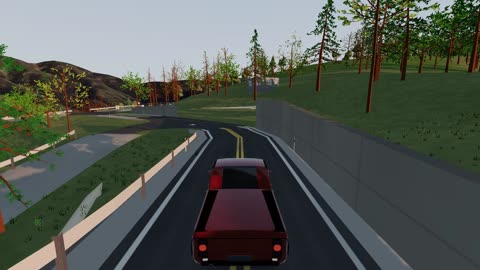
The game is a good place to feel the difference without risk. Set Stability assists in the game settings: Full keeps the car pointing where you steer, Sport lets it wheelspin and slide first, and Off leaves it all to you, with ABS still on. Then take the front-drive Pico and the rear-drive Kaze RS through the same corner and compare how each one behaves when you brake late, lift mid-corner or accelerate early.
Press B to bring in rain, which makes the road slippery. For deliberate oversteer, the Drift race type and the Drift discipline in World Motorsport score angle and speed, and Space is the handbrake. The Col de Turini hairpins test both ends of the car.
Questions
Is understeer or oversteer more dangerous?
Both mean a tyre has run out of grip. Understeer carries the car wide of the bend, oversteer can spin it; the safe answer on the road is enough speed margin that neither happens.
Do front-wheel-drive cars understeer?
They tend to when accelerating hard in a bend, because the front tyres steer and drive at once, but any car can understeer if it enters a corner too fast.
What does steering into the skid mean?
Steer the front wheels in the direction you want to travel, which is the same way the rear of the car is sliding, while easing off the brake or accelerator.
Sources
Facts on this page come from these sources, checked on 20 November 2026. Details about the game come from the game itself.
- Understeer and oversteer, Wikipedia
- What is understeer and how can it be corrected?, Driver61
- What is oversteer?, Driver61
- The Highway Code: driving in adverse weather conditions (226 to 237), Highway Code (GOV.UK)
- The Highway Code: general rules, techniques and advice for all drivers and riders (103 to 158), Highway Code (GOV.UK)
- California Driver's Handbook: Section 8, safe driving, California DMV
- FMVSS No. 126, electronic stability control systems: final rule, NHTSA