
Types of race cars: Formula 1, GT3, Rally1 and more
Race cars are defined by rulebooks, not body shapes. The main families are open-wheel single-seaters, GT cars, prototypes, touring cars, stock cars, rally cars, drag cars and karts, each built to the technical rules of a governing body such as the FIA, NASCAR or the NHRA[2][3].
Who decides what a race car is
Every racing class is a set of technical regulations. The governing body writes them, checks cars against them, and for production-based classes approves each model, a process called homologation. For GT3, for example, the FIA homologates every model, and the approval lasts seven years unless the maker asks for an extension[2].
Where very different cars race together, organisers also use balance of performance: adjustments, mainly to weight and power, meant to give each design a similar chance. The FIA applies it to the Hypercar and LMGT3 classes in the World Endurance Championship[3].
| Type | Example series | Defining trait |
|---|---|---|
| Open-wheel | Formula 1 | Single seat, exposed wheels, maximum downforce |
| GT | GT World Challenge, WEC LMGT3 | Based on a road car |
| Prototype | WEC Hypercar | Purpose-built closed car for endurance |
| Touring and stock | BTCC, Supercars, NASCAR | Saloon or coupé shape, close contact racing |
| Rally | WRC Rally1 | Four-wheel drive, any surface |
| Drag | NHRA Top Fuel | Straight-line acceleration only |
| Kart | FIA Karting | Small, light, no suspension |
Open-wheel single-seaters
Formula cars have one seat, wheels outside the bodywork and wings that press the car into the track. Formula 1 is the top of the ladder, and its 2026 rules changed the power unit sharply: the 1.6-litre turbocharged V6 stays, the MGU-H is removed, the MGU-K delivers 350 kW to the rear wheels, almost three times the previous 120 kW, and electric power is meant to supply roughly half the output, up from about a fifth[1]. All teams run advanced sustainable fuels[1]. Below F1, a ladder of smaller single-seater classes trains drivers, many of whom started in karts. F1 circuits covers where they race.
GT cars and prototypes
GT3 is the most widespread GT class. The SRO Motorsports Group created it in 2005 and the first series ran in 2006[2]. Cars must be based on road cars in series production, though the engine need not come from the same model, and typically weigh 1,200 to 1,300 kg and make 500 to 600 hp; GT3 is the premier class of GT World Challenge, runs as GTD in the IMSA championship, and since 2024 has raced as LMGT3 in the World Endurance Championship, including at Le Mans[2]. The FIA had homologated 59 GT3 models by April 2026, 19 of them still valid at the start of that year[2].
Prototypes are purpose-built closed racing cars. The top WEC class, Hypercar, uses two rulebooks: LMDh, built around common parts, and Le Mans Hypercar (LMH), which gives makers more freedom[3]. The FIA and ACO use platform equivalence to balance the two, adjusting every car of each type against the best car from each rulebook[3]. The FIA is clear that balance of performance only tweaks pace: it does not close every gap, and it does not replace driver skill, tyre management or pit work[3]. Endurance racing explains the format.
Touring cars and stock cars
Touring cars are production cars modified for racing that still look like their road versions. Their solid bodies make light contact when overtaking more acceptable than in open-wheel racing, and series keep the racing close with control tyres and ballast[7]. The British Touring Car Championship uses 2.0-litre cars built to its Next Generation Touring Car rules; Australia's Supercars use 5.0-litre V8s of about 635 hp, reach nearly 300 km/h and count the Bathurst 1000 as a championship round; Germany's DTM switched to 2.0-litre turbo four-cylinders of about 610 hp in 2019[7].
Stock cars in the NASCAR sense are now purpose-built. The Next Gen car, raced since the 2022 Daytona 500, has a steel tube frame, a 5.86-litre V8 rated in its 670 hp package for intermediate tracks, short tracks and road courses, a five-speed sequential gearbox, 18-inch wheels on a single centre lock nut, independent rear suspension and a 3,200 lb minimum weight; Chevrolet, Ford and Toyota supply the engines[4]. NASCAR tracks covers the ovals.
Rally cars
Rally cars race against the clock on closed roads of gravel, tarmac and snow, so they need four-wheel drive and long-travel suspension. The current top class in the World Rally Championship, Rally1, arrived in 2022 and allows a tubular spaceframe chassis under the bodywork[5]. Its 1.6-litre engine makes 386 PS; a hybrid unit added up to 100 kW (136 PS) of boost from 2022 until teams dropped it for 2025 because damaged units were too costly to repair[5]. Gearboxes went from six speeds to five and paddle shifters were removed[5]. The next rules, from 2027, move to a standard FIA chassis with powertrain parts derived from the Rally2 class below[5]. What is rally racing explains stages and pace notes.
Drag cars and karts
Drag cars exist for one thing: covering a straight from a standing start as fast as possible. The fastest, NHRA Top Fuel dragsters, burn up to 90 % nitromethane, with methanol making up most of the rest[6]. They race over 1,000 feet rather than a quarter-mile, a change the NHRA made in 2008 after the fatal crash of Funny Car driver Scott Kalitta[6]. The quickest runs take about 3.64 seconds at more than 340 mph, and output is calculated at roughly 8,500 to 10,000 hp, with sensor tests in late 2015 reporting peaks above 11,000 hp[6]. A Top Fuel car can reach 100 mph in as little as 0.8 seconds[6]. Drag racing covers the classes.
Karts are where most racing drivers start. Modern karting began in Southern California in the 1950s, and FIA Karting records the first kart as one built in Glendale in August 1956 by Art Ingels and Lou Borelli[8]. Ayrton Senna, Michael Schumacher, Lewis Hamilton and Max Verstappen all began in karts[8]. The FIA's categories split into direct-drive karts, gearbox karts and superkarts, and national bodies such as Motorsport UK run age-based classes from Cadet to Senior[8].
Race car disciplines in Drive Your City
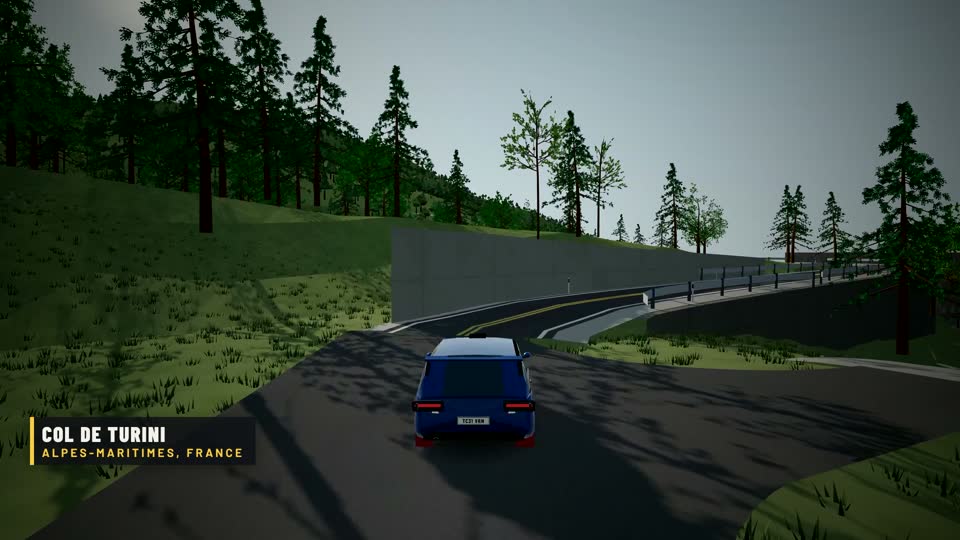
The game's motorsport side lives in World Motorsport, the Race hub's second tab: ten disciplines on 80 venues whose laps come from the game's own map data. Each discipline enters the cars that suit it: Formula in the Halcyon X and Vesper GT (there is no open-wheel single-seater in the game); Stock Car in the Anvil 440 and Vesper GT; Rally in the Gravel Ghost, Pico and Vanta; GT & Endurance in the Vesper GT, Regent and Anvil 440; Drift in the Kaze RS, Anvil 440 and Vesper GT; Drag in the Anvil 440, Halcyon X, Vesper GT and Flux; Desert Raid and Off-Road in the Ridgeway 4x4, Trailhand and Stomper (Off-Road adds the Gravel Ghost); Hill Climb in the Gravel Ghost, Vesper GT and Halcyon X.
Career XP in each discipline raises a licence from Rookie to National, International and Elite, and 13 championships are scored 25-18-15-12-10-8-6-4-2-1. A Zip Kart go-kart is in the garage for free roam. See the World Motorsport guide.
Questions
What does homologation mean in motorsport?
It is the governing body's approval of a car or part for a racing class. In GT3, for example, the FIA homologates each model for seven years.
What is a GT3 car?
A racing car based on a series-production road car, built to rules created by SRO in 2005, typically 1,200 to 1,300 kg with 500 to 600 hp, and balanced against rivals by weight and power adjustments.
What is the difference between LMH and LMDh?
Both race in the WEC Hypercar class. LMDh cars are built around common parts, while Le Mans Hypercar rules give makers more design freedom; balance of performance evens them out.
What is the fastest-accelerating race car?
The NHRA Top Fuel dragster, which covers 1,000 feet in about 3.64 seconds at more than 340 mph.
Sources
Facts on this page come from these sources, checked on 20 November 2026. Details about the game come from the game itself.
- Formula 1 2026 power unit regulations explained, Formula1.com
- Group GT3, Wikipedia
- WEC: What is Balance of Performance?, FIA
- Next Gen car, Wikipedia
- Group Rally1, Wikipedia
- Top Fuel, Wikipedia
- Touring car racing, Wikipedia
- Kart racing, Wikipedia